A Family Guide to Finding the Right Memory Care
1. Start With Your Parent’s Individual Needs
Every person living with dementia is different. Your parent may be experiencing memory loss but still be very independent in many areas of daily life. Another person may need more hands-on assistance, additional supervision, or support with communication, mobility, medications, or personal care.
Before comparing communities, take some time to think about what your parent needs today—and what they may need as their condition changes.
Consider questions such as:
- What kind of assistance does my parent need with everyday activities?
- Are there changes in memory, communication, mood, or behavior that require additional support?
- Does my parent need help with medications?
- Are there concerns about wandering or safety?
- How much social interaction and daily engagement does my parent enjoy?
- What routines, interests, and familiar activities are important to them?
- What type of environment helps them feel comfortable and secure?
Understanding your parent’s individual needs gives you a starting point for finding a memory care community that can provide the right level of support while still encouraging independence and meaningful daily experiences.
2. Look for Specialized Memory Care Experience
When your parent is living with Alzheimer’s disease, dementia, or another form of memory loss, specialized experience matters. Memory care is different from traditional assisted living because the environment, routines, activities, safety considerations, and approach to care are designed around the unique needs of people experiencing cognitive changes.
When visiting a community, ask about its experience providing memory care and how team members are trained to support residents living with dementia.
You may also want to ask:
- How does the community approach dementia and Alzheimer’s care?
- What type of ongoing training do team members receive?
- How are care plans created and updated?
- How does the community respond when a resident’s needs change?
- How are residents supported when they are experiencing confusion, anxiety, or changes in behavior?
At Aravilla Clearwater, memory care isn’t simply one service we offer. It is what we do. Our dedicated, stand-alone memory care community is thoughtfully designed around the needs of individuals living with Alzheimer’s disease, dementia, and other forms of memory loss.
3. Get to Know the Care Team
The people caring for your parent will become an important part of their everyday life, so take the time to learn more about the care team. Ask about their experience, training, and approach to caring for individuals living with dementia. But don’t stop with the answers you receive. During your visit, watch how team members interact with residents.
Do they greet residents warmly? Do they know residents by name? Do they speak respectfully and patiently? Do residents seem comfortable approaching them?
Those little interactions can tell you a great deal.
You may also want to observe how team members communicate with one another, ask about how changes in a resident’s needs are shared, and how the community works with families when questions or concerns arise.
Ultimately, you are looking for more than qualified caregivers. You are looking for people who genuinely understand that care begins with seeing the person behind the diagnosis.
4. Find Out What Everyday Life Is Really Like
When you are comparing memory care communities, don’t just ask, “What activities do you offer?”
Ask, “What does my parent’s typical day look like?”
Meaningful memory care is about much more than keeping residents busy. Daily life should provide opportunities for connection, purpose, enjoyment, movement, creativity, and familiar experiences.
Depending on the community, that might include:
- Music and entertainment
- Exercise and wellness activities
- Arts and crafts
- Games and cognitive activities
- Outdoor time
- Social gatherings and celebrations
- Community outings
- Dining and shared meals
- Opportunities to participate in familiar hobbies and interests
- Quiet spaces for relaxation and personal time
At Aravilla Clearwater, we believe residents should have opportunities to continue enjoying the things that make life meaningful. Activities and experiences are designed not simply to fill the day, but to encourage connection, engagement, and moments of happiness.
5. Pay Attention to the Environment
The physical environment can make a meaningful difference in how comfortable and confident a person with memory loss feels each day.
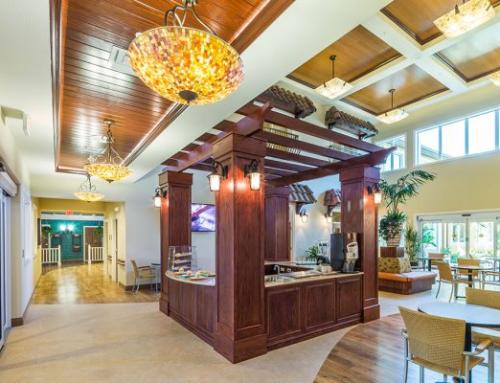
When you visit a memory care community, look beyond the décor. Notice whether the environment feels welcoming, comfortable, calm, and easy to navigate.
Pay attention to:
- Lighting and natural light
- Noise levels
- Cleanliness
- Common areas
- Dining spaces
- Outdoor areas
- Comfortable places to sit and visit
- Wayfinding and ease of navigation
- Safety features
- Whether the environment feels warm and residential rather than institutional
Most importantly, notice how you feel when you walk through the door—and how the residents appear to feel.
At Aravilla Clearwater, we believe a beautiful community is just the beginning. What matters most is creating an environment where your loved one feels comfortable, respected, safe, and supported—and where their quality of life remains at the heart of every day.
6. Ask How Care Is Personalized
Two people can have the same diagnosis and have completely different needs, personalities, routines, and preferences. That’s why personalized care matters so much.
Ask how the community gets to know each resident beyond their medical or care needs.
Does the team learn about your parent’s history, interests, favorite foods, hobbies, routines, and personality? How are those things incorporated into everyday life?
A good memory care community should understand that your parent is still the same person who has always loved certain music, enjoyed certain foods, treasured certain traditions, or had a particular way of doing things—even as dementia changes some aspects of their life.
At Aravilla Clearwater, we believe those personal details matter from the very beginning. That’s why our personalized approach starts on move-in day, when each new resident is welcomed with the support of a Personal Concierge who helps ease the transition and takes the time to get to know them. Those personal connections help our team provide care that feels genuinely individualized and personal.
7. Ask How the Community Communicates With Families
Choosing memory care doesn’t mean becoming less involved in your parent’s life. In fact, a strong relationship between the community and the family can make the transition easier for everyone.
Ask how the community communicates with families and who you should contact when you have a question or concern.
You may want to ask:
- How will I receive updates about my parent?
- Who should I contact if I have a question?
- How will I be notified if my parent’s needs change?
- How does the community involve families in their loved one’s life?
- How are concerns or questions handled?
Good communication provides something families need just as much as their loved ones do: peace of mind.
At Aravilla Clearwater, we consider open communication and strong family relationships an important part of providing exceptional care. You should feel comfortable asking questions, sharing what you know about your parent, and staying connected with the people who are caring for them. We believe that when families and care teams work together, everyone has a better understanding of the resident as a whole person—and that helps us provide more personalized, compassionate care.
8. Understand the Community’s Approach to Safety
Safety is naturally one of the biggest concerns when choosing memory care. Ask how the community approaches common concerns associated with dementia, including wandering, falls, medication management, emergencies, and changing care needs.
But safety should not mean taking away every opportunity for independence.
The goal should be to create an environment where residents can be appropriately supported while still having opportunities to move, participate, socialize, make choices, and enjoy their surroundings.
When you tour a community, ask how safety is balanced with dignity and independence. Understanding the community’s philosophy can help you determine whether its approach feels right for your parent and your family.
9. Understand the Cost of Memory Care
Cost is an important part of choosing memory care, and families deserve clear information about what they are paying for.
When comparing communities, ask for a detailed explanation of the monthly cost and what is included. Depending on the community, there may be additional fees for certain services, care needs, medications, supplies, or other programs.
Ask questions such as:
- What is included in the monthly rate?
- Are there additional care fees?
- Are there community or move-in fees?
- Are medications included?
- Are there additional costs associated with incontinence care or other specific needs?
- Can the monthly cost change if my parent’s care needs change?
- Are there financial resources or benefits that may help with the cost?
Don’t be afraid to ask for clarification. Understanding the complete financial picture can help you compare communities more accurately and avoid surprises later.
10. Visit the Community and Trust What You See
Once you have narrowed down your options, visit the communities you are considering. Photos and websites can tell you a lot, but they cannot replace being there in person.
As you walk through the community, slow down and take it all in.
Watch how residents interact with one another. Notice how team members speak to residents. Look at the dining room, common areas, outdoor spaces, and places where residents spend their time. Ask questions. Listen to the answers.
And pay attention to how you feel.
If possible, consider visiting more than once or visiting at different times of day. You may notice different aspects of the community during a morning activity, lunchtime, or a quieter afternoon.
Most importantly, try to picture your parent there.
Could you imagine them feeling comfortable here? Could you see them being known and cared for here? Could you see them finding moments of connection, purpose, and enjoyment?
Finding the Right Memory Care Community for Your Family
There is no single checklist that can tell you which memory care community is right for your parent. The best choice is a community that can meet your loved one’s needs while also providing an environment where they can feel safe, supported, connected, and valued.
At Aravilla Clearwater, we believe memory care should begin with seeing the person—not simply the diagnosis. Our dedicated memory care community is thoughtfully designed for individuals living with Alzheimer’s disease, dementia, and other forms of memory loss. Our team is trained through essentialALZ® Alzheimer’s Association Training & Certification, providing specialized education that helps our caregivers better understand the unique needs and experiences of people living with Alzheimer’s and dementia. Combined with personalized care, meaningful experiences, and genuine compassion, this training helps us provide the thoughtful support each resident deserves.
If you are beginning to explore memory care in Clearwater or surrounding Pinellas County communities, we invite you to come see Aravilla Clearwater for yourself. Meet our team, explore our community, ask your questions, and take the time you need to decide whether we may be the right fit for your loved one.
Choosing memory care is a big decision. You don’t have to make it alone.